
A short cave trip works better with one objective: enough iron for a particular job, a few building stacks or a look at a nearby entrance. Pack for that outing instead of carrying everything valuable from home. Leave room for the things you intend to bring back.
Give the hotbar a stable order
This is a suggested nine-slot layout, not a required or universally best arrangement:
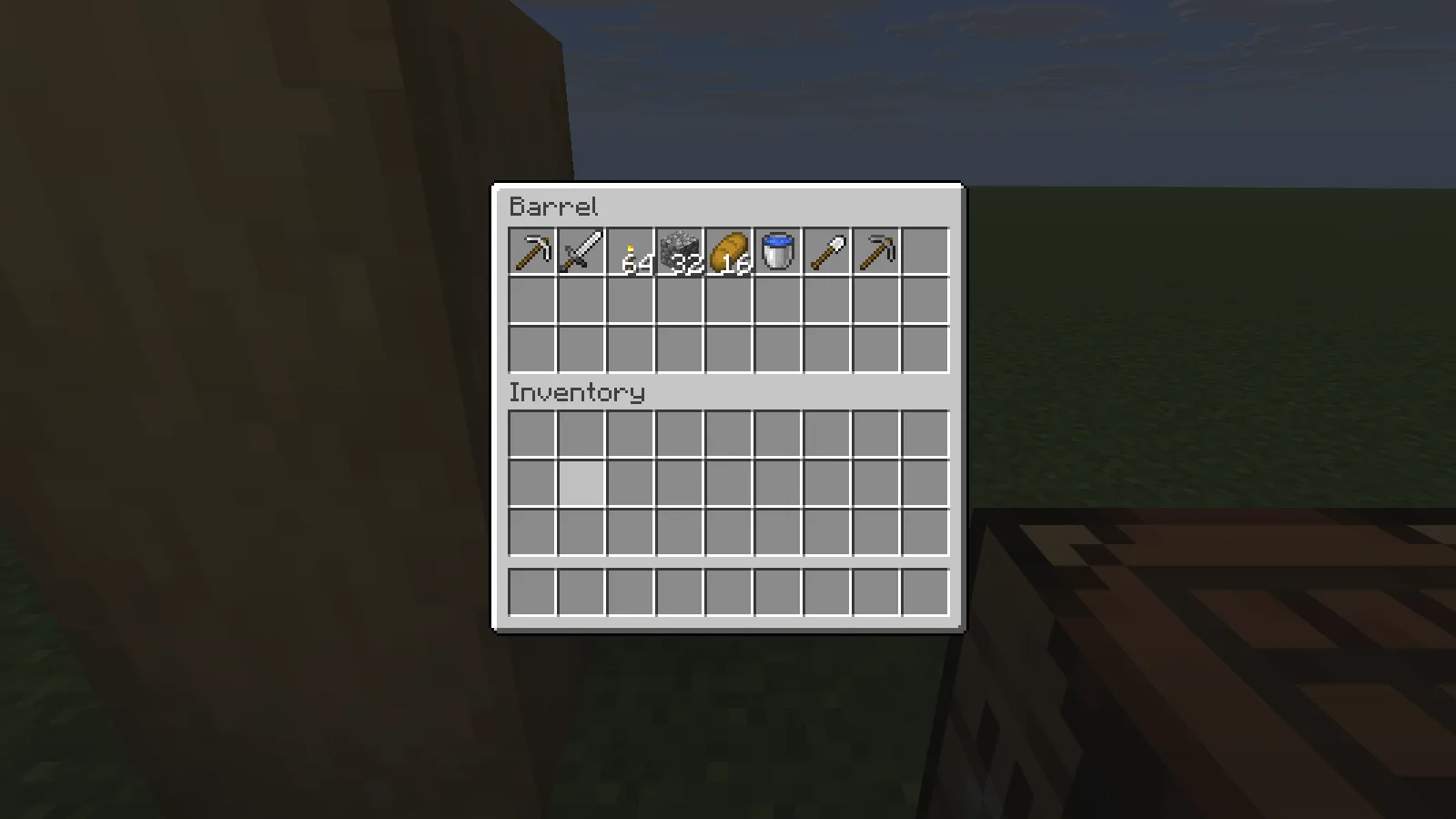
Eight prepared supply stacks in the barrel before packing. Java 26.2 inventory example.
- Main pickaxe: suitable for the material you intend to mine, with useful durability left.
- Weapon: something you already know how to use.
- Torches: within easy reach while moving.
- Ordinary building blocks: for a step, a barrier or a simple way back up.
- Food: one deliberate supply rather than several tiny stacks.
- Water bucket: for controlled situations where water is useful.
- Shovel: for clearing an inconvenient patch of dirt or gravel.
- Spare pickaxe: a way to finish the return if the main tool runs low.
- Free or task-specific slot: keep it open, or use it for the one special tool the outing needs.
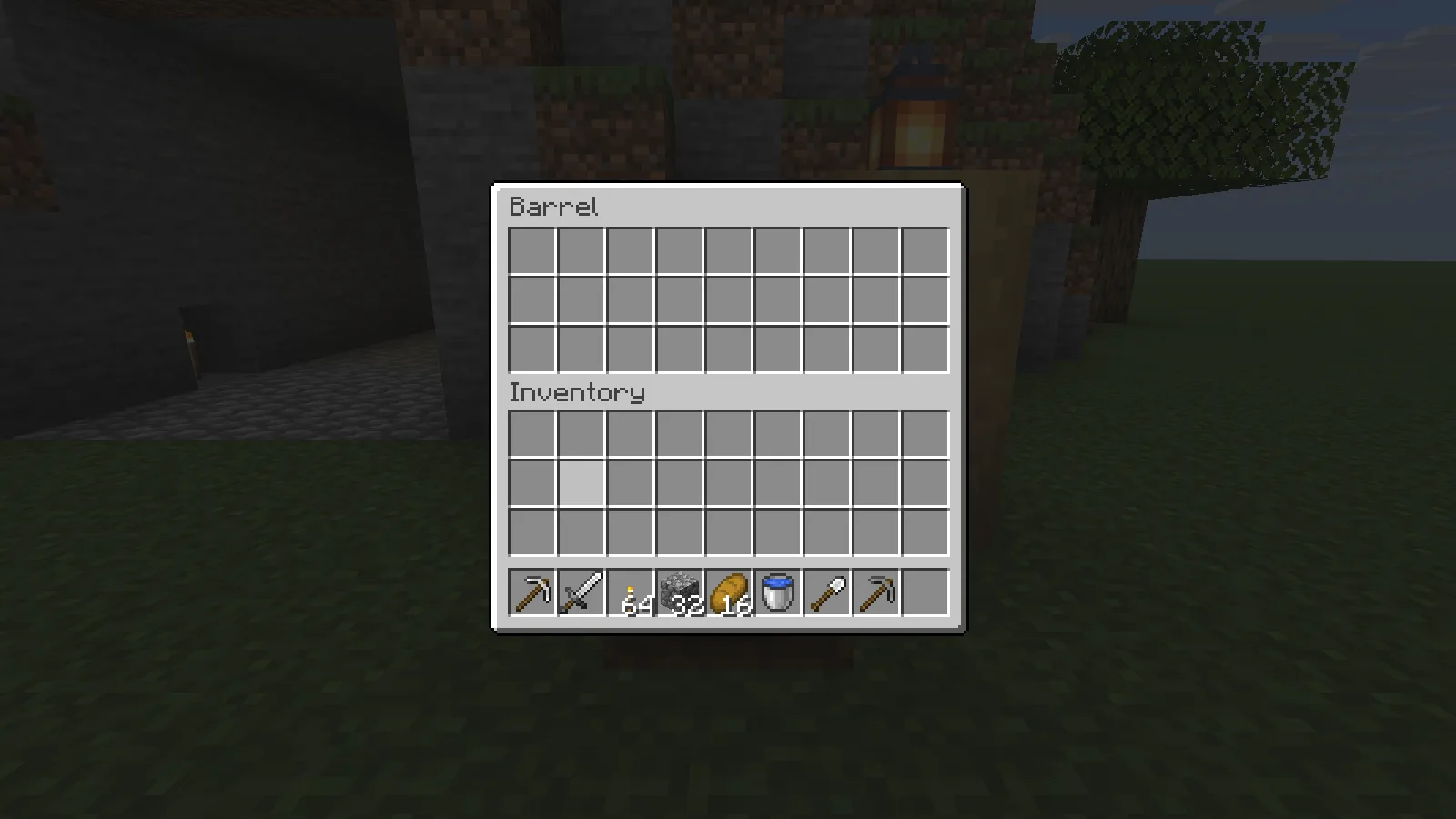
The prepared supplies moved into hotbar slots one through eight, leaving slot nine empty. Creative inventory demonstration in Java 26.2.
Swap the positions to suit your controls, then keep them consistent between trips. Do not put a lava bucket in the slot your hands expect to contain water. A familiar layout is useful because the important item stays where you expect it when the surroundings become busy.
Keep armor and other equipment appropriate to the cave. The nine slots are a packing aid, not the whole loadout, and tool tier still matters for collecting some resources.
Make the route readable
Place lights as you move into the cave rather than waiting until you feel lost. At a branch, use a simple marker or sign that means “way out.” A convention such as placing route markers consistently on one side can help, but loops and natural junctions still need attention.
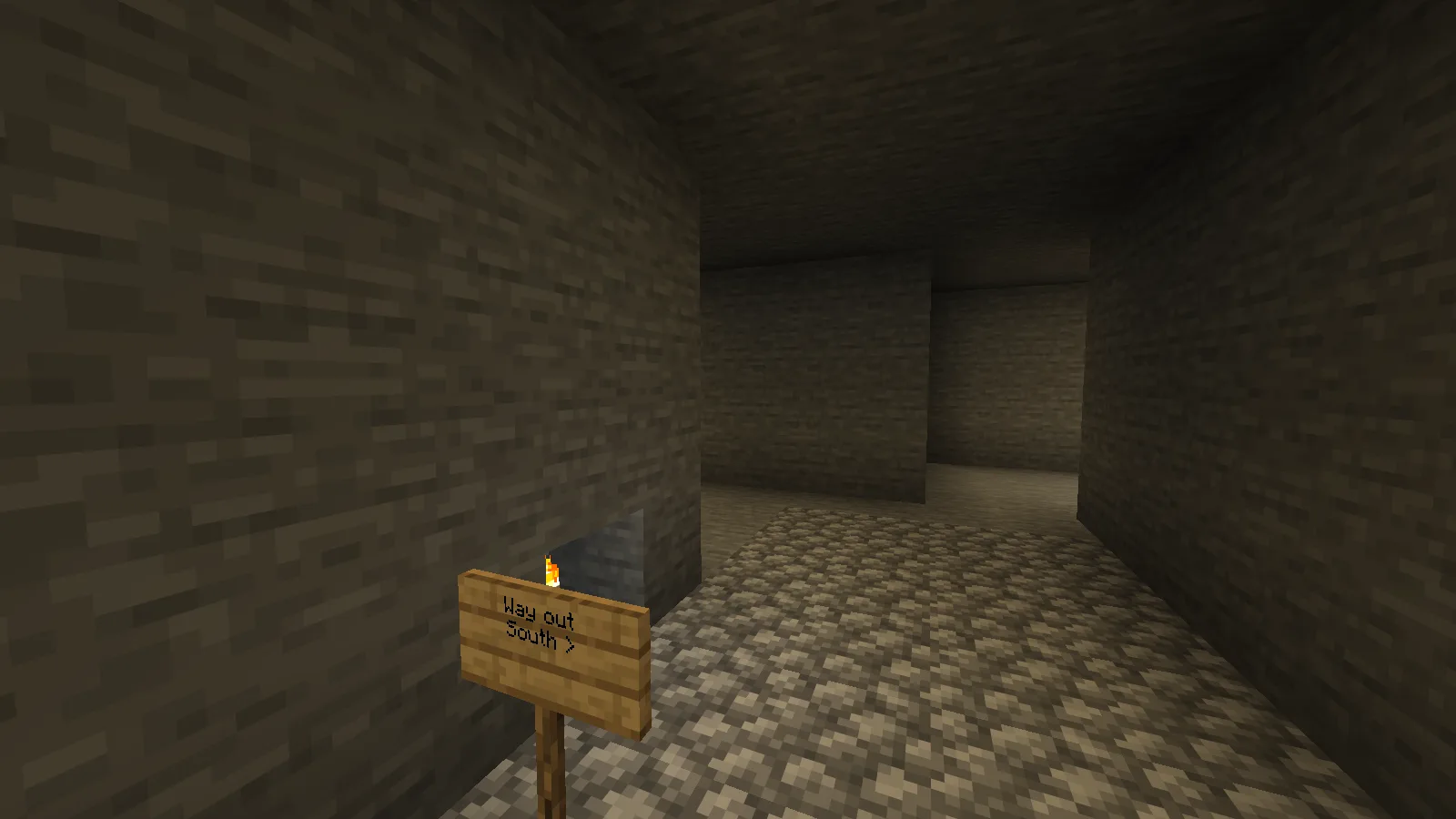
A torch and exit sign make the return direction explicit at a prepared cave fork. Java 26.2 demonstration build.
Before descending a ledge, identify how you will climb back. Keep building blocks for that return instead of spending the last of them on an unnecessary shortcut. Treat the water bucket as a tool you understand, not a promise of rescuing any fall.
Turn back with something left
Choose a personal return point before you leave: the objective is complete, the spare light supply is being used or the main pickaxe is getting too worn. Those are sensible limits, not hidden game rules. Bring enough food and lighting to leave with a reserve rather than trying to finish every visible vein.
At home, unload the trip's materials, refill the same hotbar positions and replace worn tools. The next departure becomes easier because you are restoring a known arrangement.
Comments & questions
Share what worked, ask for help or reply to another player.
No comments yet. Share what worked for you.