
A useful vegetable garden is easy to walk into with seeds and easy to leave with food. Improve three things before expanding the field: access, irrigation and the place where supplies return. A small garden that fits your daily route can be more convenient than a much larger field you keep postponing.
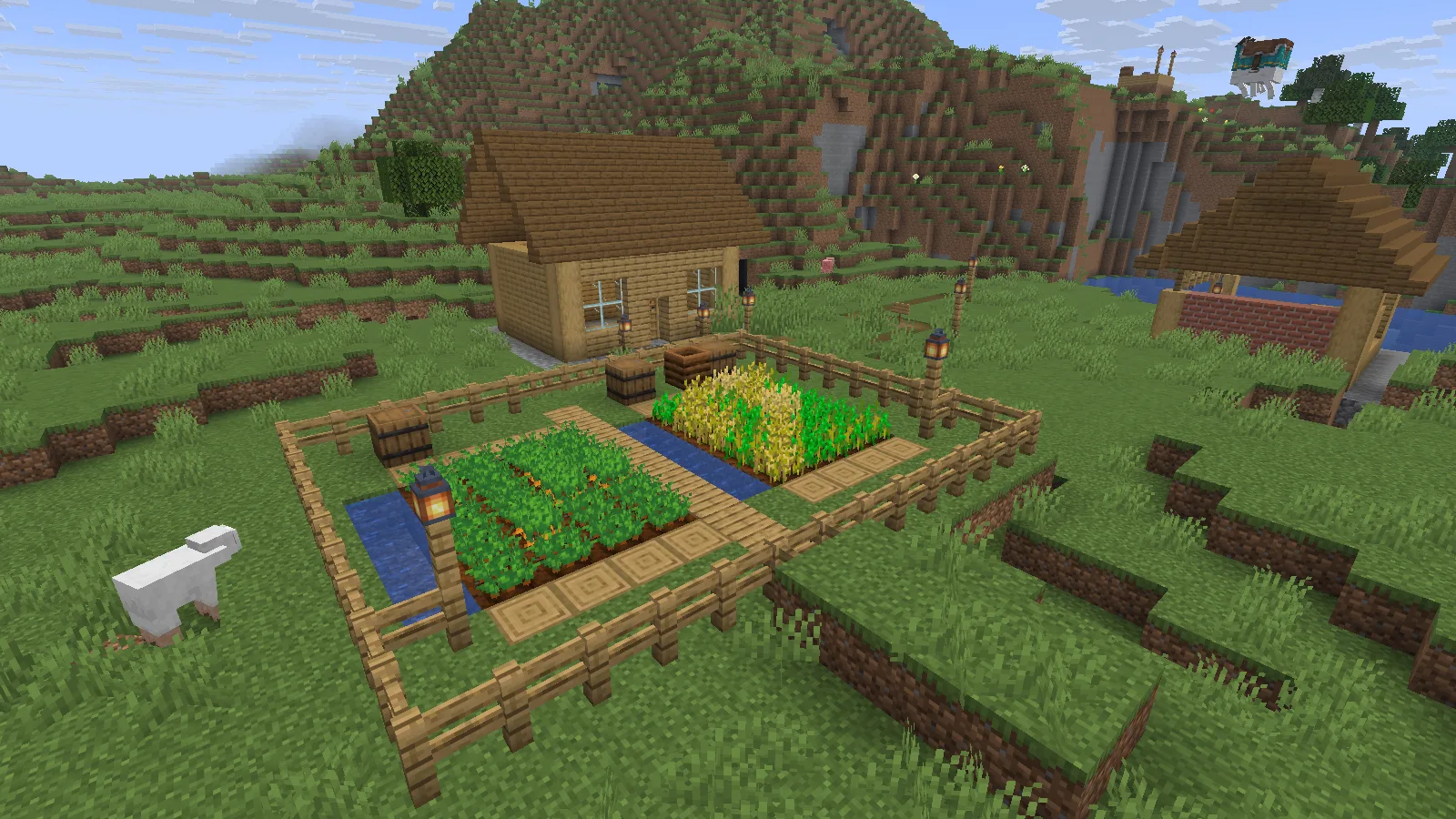
Two four-by-five crop beds with water channels, a walking strip, lights and storage. Original Creative build on natural Java 26.2 terrain.
1. Give your feet their own route
Start with a bed four blocks wide and five blocks long. Keep a walking strip around it and put the entrance where the path from home reaches the garden. Add a second bed beside the first when you want another crop, leaving a clear central route between their working edges.
Use one border material so it is obvious where the field ends. At any raised entrance, use a stair or a gentle approach instead of forcing a jump onto the soil. Keep decorative planters outside the gate's working space.
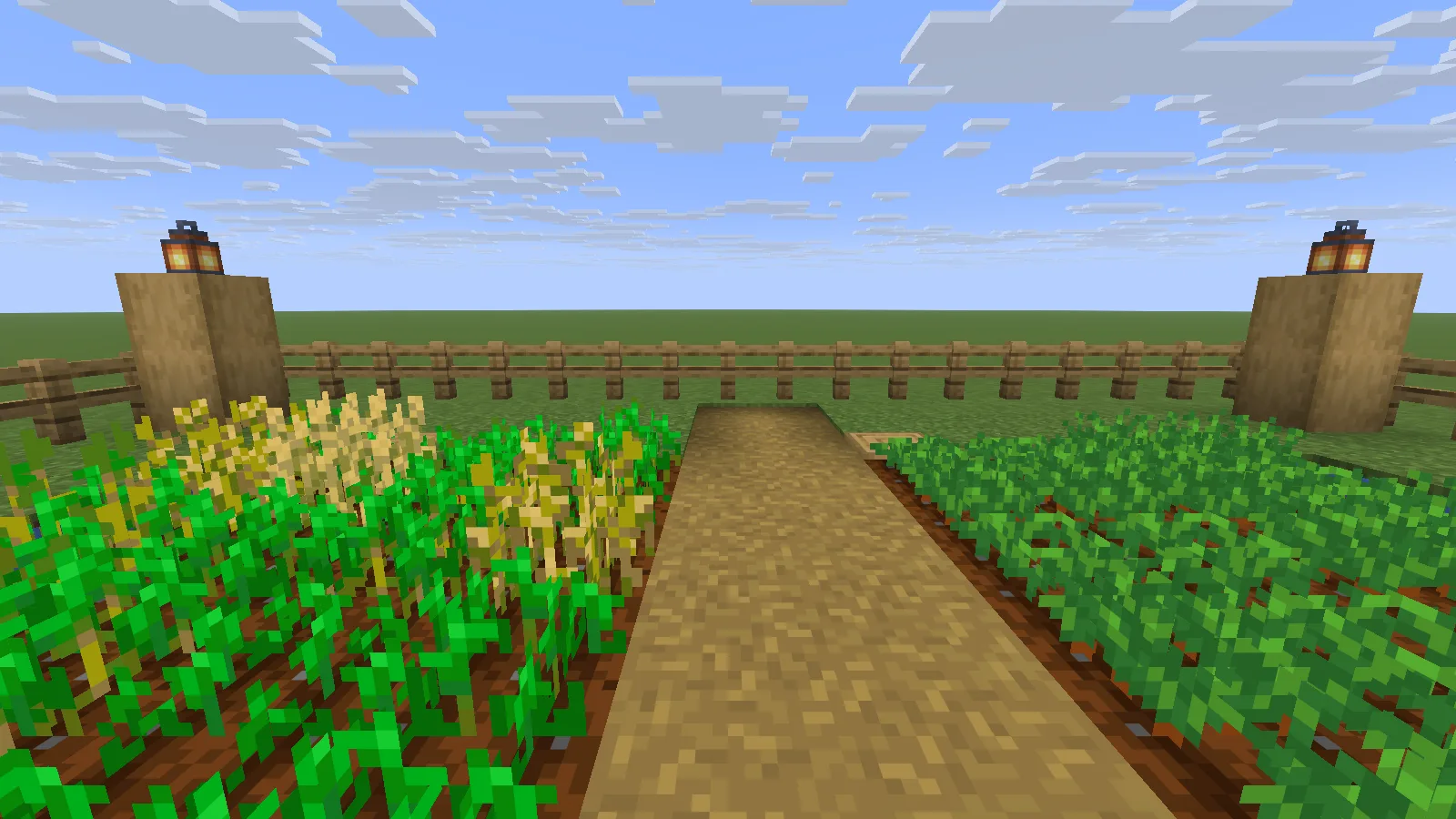
The central walking strip keeps feet off the wheat and carrot beds. Java 26.2 demonstration garden.
Jumping on farmland can turn it back into dirt, and animals can trample it too. A fence and gate help keep the planting area separate.
2. Put the water where the bed can use it
For the first bed, make a one-block-wide water channel along a long edge, at the same level as the soil. With a four-block-wide bed, the far row remains within four blocks of that channel. Use the darkening soil as a visible check that the farmland is becoming hydrated.
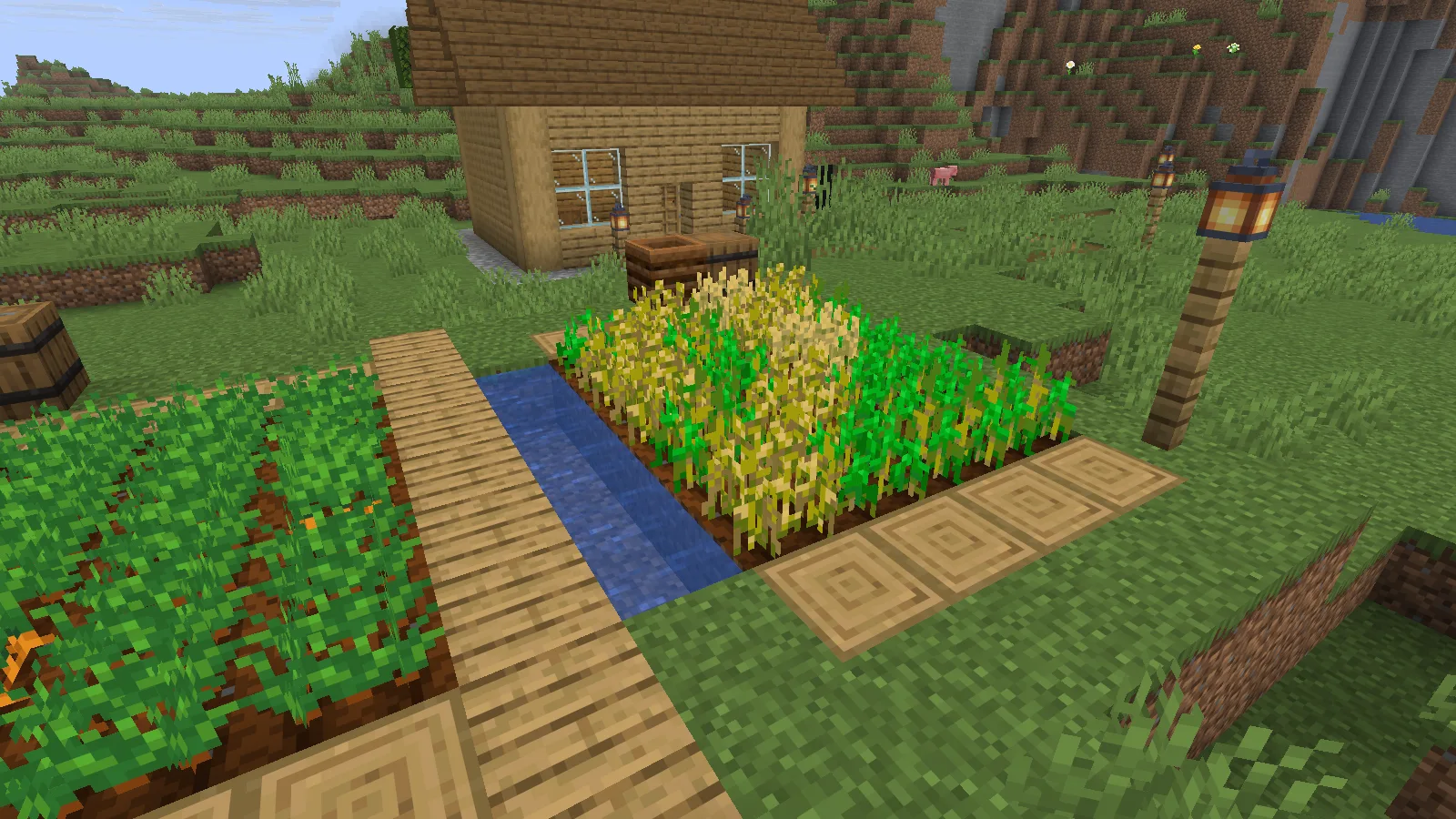
The visible irrigation channels and working strip before the surrounding fence was added. Original Creative example in Java 26.2.
Keep the water easy to recognize in the first version. If the channel crosses the route you use, make a small bridge over that crossing instead of turning the daily walk into a repeated jump. Leave access to the crops from the dry edges.
Add ordinary lights around the working area so the gate, rows and supply corner remain readable after sunset. Lighting also helps crops, but a single attractive lamp should not be treated as a measurement of every growing spot.
3. Separate seed, harvest and equipment
Set up a compact supply corner with three clear jobs: planting stock, food to take home and tools. Barrels fit under a small roof and can open with a solid block above them.
For a twenty-plant bed, put aside enough seed or planting crop to replant those twenty spaces before carrying the surplus away. This is a simple storage habit, not an automatic system. Keep a spare hoe nearby so one damaged soil block does not interrupt the whole job.
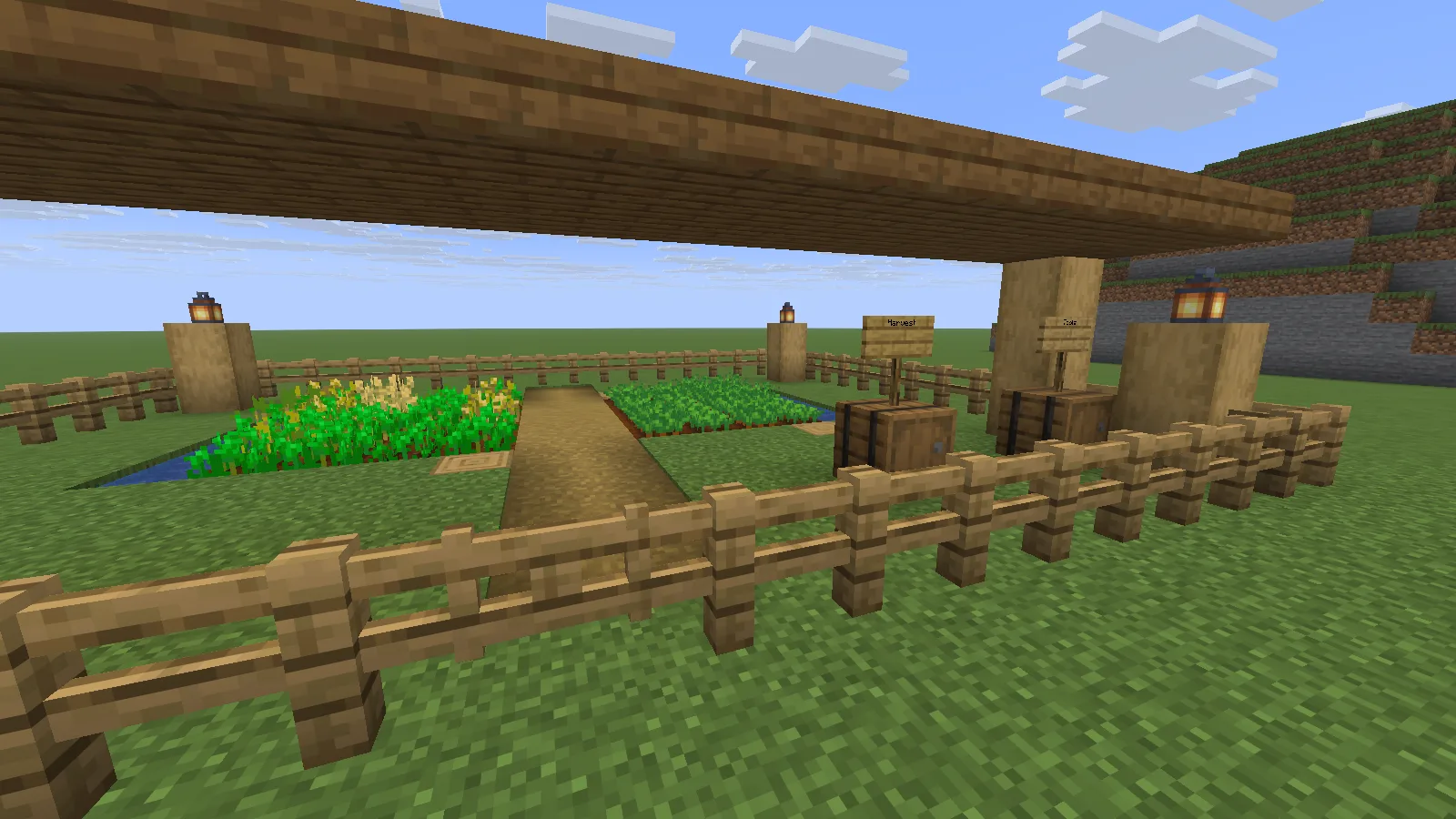
Labeled supply barrels sit beside the garden gate. Java 26.2 demonstration garden.
Finish by walking the harvest routine: enter, reach each row, replant, return tools and leave with the surplus. Move a container or widen a corner if that sequence feels cramped. Flowers and a bench can come afterward, when the garden already works.
Comments & questions
Share what worked, ask for help or reply to another player.
No comments yet. Share what worked for you.